

Rolfing works with fascia — the connective tissue that wraps, separates and connects everything inside you, from muscle to organ to bone. Fascia forms one continuous network, so tension or restriction in one area rarely stays local: how your shoulder holds itself can show up in how your hip bears weight, or how your breath moves. Rolfing works with this network as a whole rather than addressing a single area in isolation.
And because we’re always standing, sitting or moving within gravity, part of what we’re exploring together is how your body currently negotiates that relationship — where it has found real support, and where it’s been quietly working harder than it needs to. Your body isn’t a collection of independent parts to work on one at a time; it’s an organization, and Rolfing looks at the pattern as much as the point that hurts.
Rolfing isn’t about making everyone conform to the same shape. It is about exploring whether your particular body can find greater support, adaptability and freedom.

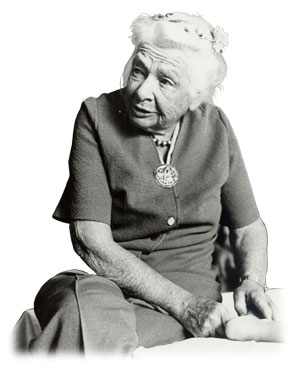
The Rolfing touch
What actually happens under my hands is different from most bodywork you may have experienced.
Rolfing touch is slow and specific, and it follows the tissue rather than imposing on it. Rather than applying a fixed sequence of strokes, I’m reading what’s there — the direction, density and quality of the fascia — and adjusting pressure, angle and pace in response to what changes underneath my hands as we work. It’s closer to a dialogue than a technique: I ask a question with my hands, the tissue answers, and the next touch responds to that answer.
This is also why Rolfing isn’t relaxation massage, even though both are hands-on. Rolfing touch is oriented toward organization — how this area relates to the rest of you, and toward gravity — so the same touch that eases tension is also gathering information about your whole structure, session after session.
You stay an active participant throughout. You’re not a surface being worked on; your feedback, your breath, your own noticing are part of what shapes where the work goes next.
Curious about the sessions?